|
PRE-PREFACE (Home)
The article you are about to read does not make any negative or positive references to
any religious or mystical beliefs. Thus, nobody needs to push any personal
boundaries. The author of this article literally and sincerely believes
that Science is the most reliable
guide in life. The author objects to autocratic, egocentric and
arrogant attitudes embraced by some self-evident
scientists, such as “I am a
scientist therefore everything I utter is indisputable”.
Then -and to say that- the Author is neither
unscientific nor against science - as supposed by
some scientist people who suffer from disease of insisting on not understanding what they
read; on the contrary, the author refuses the scientists
stereotype which is in pursuit of scientific-superstitions arguments
to explain the billions years of the Earth history without any
evidence whatsoever, such
as “the Earth was a part of Sun, lava has not cooled yet, our ancestors
survived through the Ice Age” etc.
PREFACE
The article you
are about to read is not a study
scientifically proven but merely an assumption.
The Author of this article
is aware that his arguments might strike you as very "radical"
and also might be considered as “utter nonsense".
This assumption does not include
any precise information.
However, the sole precise aspect of this assumption
is the fact that proving opposite of
these claims is neither as
easy as suspected.
Please read the article only once patiently from cover to cover before sending
the Author to the Inquisition.
SECTION I - EARTH WORKS LIKE A
MACHINE
(Home)
1- The Earth
functions almost like a mechanical system. Just like a machine, it is
a combination of several parts. These parts works in perfect harmony
as an infallible system.
Figure 1 – “PARTS OF EARTH”
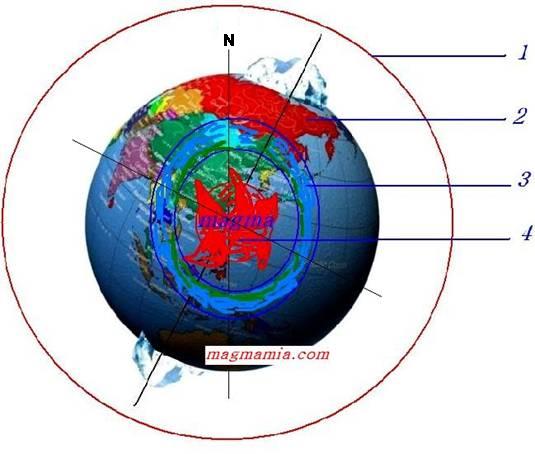
2- This "machine" has 4 major
parts (Figure 1) :
I - “Atmosphere”,
II - “Life
Layer” covering glaciers, earth’s crust, seas and deserts and reaching
up to the atmosphere,
III - “Oil
and Natural Gas Layer” under the surface of earth and seas,
IV -
And “Magma Chamber”, the igneous inner chamber of the Earth
3- Magma is the “Boiler
Room of Earth".
The function of the “boiler
room" is to take in and then burn all fluids.
There are 3 fluids continuously flowing
into the “boiler room";
those are WATER, SAND and PETROLEUM.
Those fluids are reserved in 3 separate "fuel
tanks". Those fuel tanks are the SEAS, DESERTS
and OIL FIELDS.
4- The
natural gas, occurring together with petroleum, spreads
a CRYOGENIC TEMPERATURE as
a result of the “pressure
difference” caused by the Earth rotation.
THE POLAR GLACIERS
are formed when the “cryogenic
temperature” spreading with natural gas decomposes and freezes the clouds
rising to the atmosphere and they are protected by cryogenic temperature at
the bottom.
Assuming that Polar Glaciers,
which have indispensable role for sustaining life and climate conditions,
are “random remains of the Ice Age”
is a misconception.
There will be no rain –since
condensation of clouds is not possible- without the glaciers, and thus
water source of the seas is not the rainfalls but the Glaciers are the source of both rainfalls and seas.
The Seas are melted of the Glaciers.
5- The axial tilt of 23.5 degrees allows seawaters, desert sands and petroleum to flow from their
channels into Magma in a
specific order and burn in
there.
Petroleum and sand directly flow into the Magma to keep the fire
alive whereas the Magma burns the underground seawater in order to cool
down the Earth.
The Smoke coming out of the Magma is sent up to the surface
after it is filtered on the underground layers.
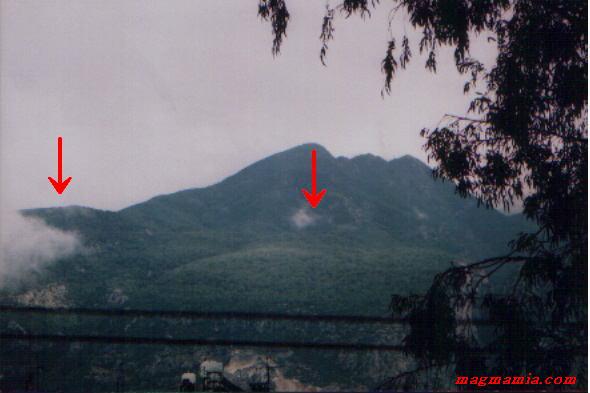
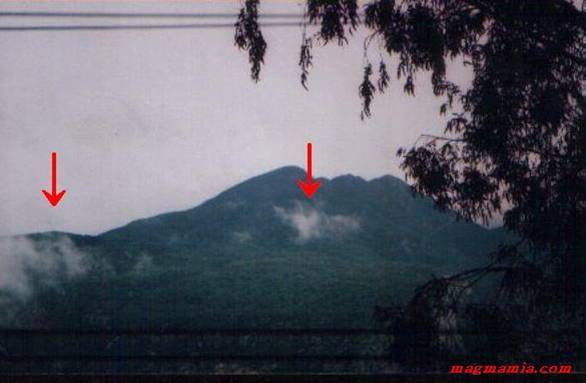
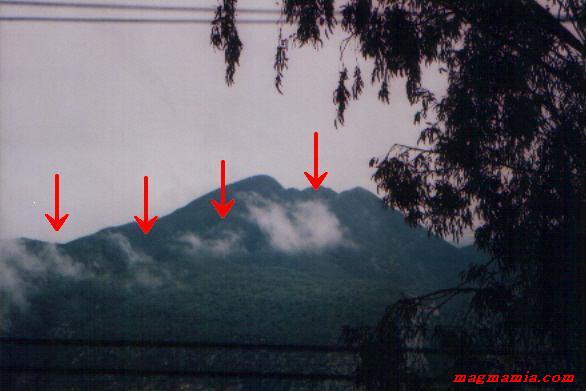
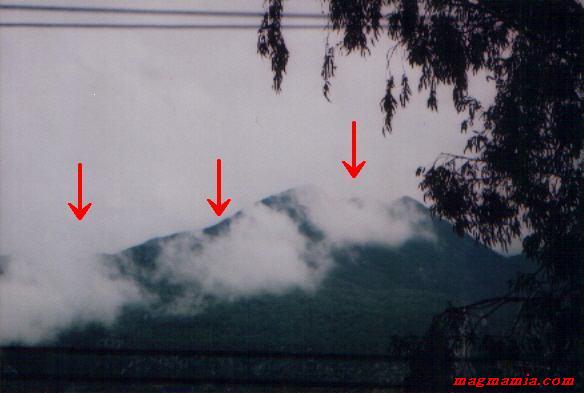
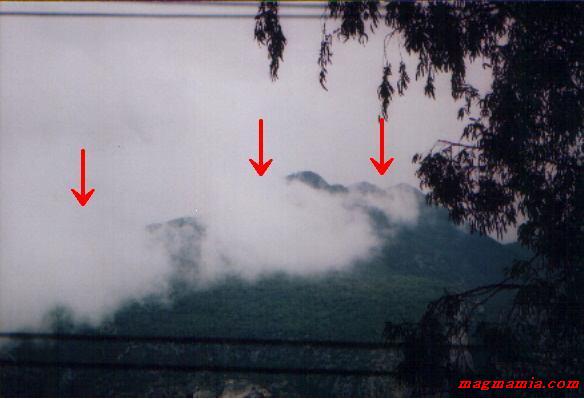
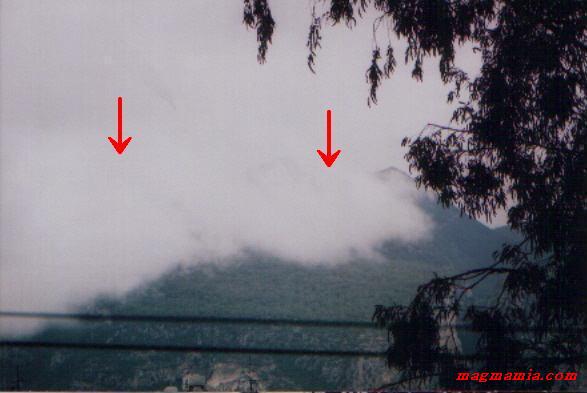
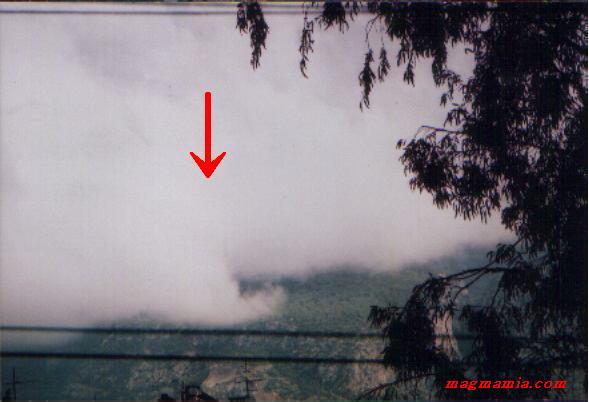
The following
photos illustrate how this "SMOKE" rises to the surface first and then
expands to the vicinity gradually.
> [A NECESSARY
NOTE: The
Author of this article is aware that the following photos and the claims
underneath them are "unbelievable". The photos are only a
few examples from hundreds of photos personally taken by the Author and
they are the most easily
demonstrable aspect of the assumption you are reading…]
>> [AN
IMPORTANT SIDE NOTE: A shortly after
this article was completed (and notarized on July 8, 2005 and sent to a "Science Institution" on
August 31, 2005), on March 2006, NASA announced
to the world that: "the Cassini
spacecraft has determined ‘water’ on the Saturn's moon Enceladus
and this water ‘formed by condensation of gases coming from underground
layers’...” [please click here for related articles]
Following this extremely important
discovery, the Author of this article once again requested related parties
and institutions to "urgently review of this file” but
unfortunately this request was never taken seriously. A review of the
following photographs and claims underneath them shall clarify why the
discovery mentioned herein is highly important.]
|
|
|
Photograph
1: The moment smoke “comes
out”.
|
|
|
|
Photograph
2: 30 seconds later.
|
|
|
|
Photograph
3: 1 minute later
|
|
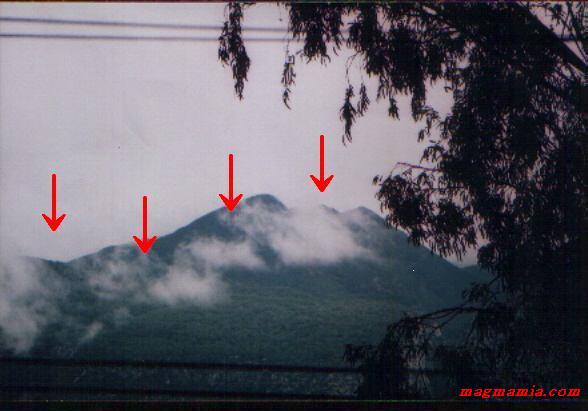
|
|
Photograph
4: 1.5 minutes later.
|
|
|
|
Photograph
5: 2 minutes later
|
|
|
|
Photograph
6: 2.5 minutes after the smoke comes out
|
|
|
|
Photograph
7: 3 minutes later
|
|
|
|
Photograph
8: 3.5 minutes later after the smoke comes out, and the peak is almost
covered with the smoke.
|
It
might be surprising that those images are “reminiscent of clouds”. They really do look like clouds.
Moreover, they are the
“CLOUDS”!
The actual surprise here
is that, until now, everybody had somehow missed that the clouds are formed
forming in this way (by infiltrating
from the underground)!
Assuming that the
clouds “are formed of water vapor
rising from the surface, climbing over the mountain slopes and
rising up to the sky” is one of the
biggest misconceptions of human history.
6- If the clouds were formed with
surface water evaporated by the sun:
a) Neither the clouds would form,
and nor the rains would fall in cold regions lacking sunlight.
b) The summer regions would be the
cloudiest areas since they are rich in sunlight and the summer season would
have the most rainfall intensity.
c) If the clouds were surface waters evaporated by the Sun
-since salt evaporates at approximately 500 degrees- salts in the seas
would not be evaporated and the
clouds would be nothing more than a mass of pure water vapor,
containing no salt. In this case, when the clouds start to freeze, they
would not fall as tiny rain drops or snowflakes but as huge icebergs.
VAPORIZED SALT is the element assuring that clouds fall on us as tiny drops
rather than ice block and the tiny drops do not stick together. And the
sole source of heat capable of evaporating sea salt is the MAGMA.
7- The source of drinking water is not the underground rain waters but the “smokes” (clouds) which comes out
of the mountains after surfacing from underground stratums and being
filtered.
Some of this smoke rises by
following the paths in the mountains, fills into the cold cavities in the
mountains and forms pools by condensing and transforming into water.
*/*
SECTION II - “FUEL TANKS" of EARTH and FUEL RESOURCES (Home)
1) WATER
"Water",
essential fuel of the Earth, is
not a substance that exists on the Earth but produced by the Earth. In other words, the Earth is not the “sole planet having water” but the “sole planet producing water”. The “smokes” (clouds) coming out of
under the ground are transformed into water as they are frozen and
decomposed by the Earth.
ICE is the first and original
form of water in the Earth.
Ice is not “frozen water”, but
water is “melting ice”.
The polar glaciers were formed
on account of frozen and decomposed of the smokes steaming from the Magma,
by freezing coldness of the natural gas released from the underground; and the Glaciers are the “primary source”
of the “first” water on the Earth.
The existing seas are also from
the melting Glaciers.
The Glaciers have three
important functions:
i) To create cold air pressure
to balance temperature in the Magma,
ii) To transform the clouds into the water (rainfall) by condensing, decomposing them.
iii) To decompose and melt, if
necessary, to compensate for the sea-level drop.
The time when the Glaciers will melt and flow into the seas is
matter which depends on the salinity of the seas.
The high salinity melts the glaciers which are in contact with
the bottom of sea. Thus, the fresh water released from the glaciers into the seas will
reduce density of salinity and the melting rate of glaciers will decrease
and eventually stop.
The reason of sea-level drop is the seawater circulating under the Earth crust to protect (to cool
down) the Earth from the Magma’s
heat but also burnt by the Magma.
(The photographs illustrate how the burnt seawater rises from the mountains
as “clouds”.)
This burning shall cause a sea-level drop on both hemispheres.
However, the sea-level drop on
the winter hemisphere
automatically activates the river
outlets which are balanced with
sea-level. Thus, the rivers overflowing with rain waters prevent
sea-level drop and melting of the glaciers by diluting the salinity.
On the other hand, since the summer hemisphere has lower rainfall
intensity and lacks the support of rivers waters, the glaciers should make
up for the sea-level drop. The seas preserve salinity density because
they have no fresh water support and they compensate for the level drop by melting the Glaciers.
As for the melting glaciers,
they repair themselves by condensing the water decomposed from the clouds
in winter.
The Seas (as explained in detail
later on the “Weather and Climate” section) does not only protect the Earth
against Magma heat by circulating underground but also with their presence
on the surface (covering ¾ of the Earth’s surface).
The seas prevent overheating of the Earth’s Crust by
absorbing the Magma heat at sea bottoms and quickly sending it to the
surface.
SALT
enables the seas to transfer heat without
vaporization.
The heat of Magma is absorbed by
salt in the seas and sent to the surface. The boiling point of
the salt water is higher, and
thus the latent heat required
for boiling and vaporing the seawater is also
higher.
The seas neither evaporate
and nor lose any water content during this process since they are
capable of transferring the heat of Magma to the surface quickly before they reach to the boiling point thanks
to their salt content. (Salt
which prevents vaporization of the seas –vital elements of the Earth- is
probably produced by the marine
species.)
2) PETROLEUM
As opposed to the popular
belief, the source of the petroleum is not the 650.000-year old fossils. The Earth produces petroleum (and
natural gas) “every each second”.
All corpses, all human and
animal feces and the garbage dumps… continuously decay and mix into
the soil. All decays are
carried into the rivers and then into the seas by rain. Sand, carried from
the deserts by the winds into the seas, grinds and crumbles the decays on
the sea bottom by working as a grinder. First, all decays are pushed to the sea
bottoms and then to the petroleum
reserves by covering the existing sand layers with new layers of sand
brought with the winds.
The heat coming out of the Magma
assures that decays in the
reserves transform into petroleum
and release natural gas as well
as carrying the leased natural gas to an upper stratum (closer to the
surface). (The importance and the function of natural gas for the Earth are
explained above.)
The axial tilt of 23.5 degrees allows petroleum both to be reserved
and to flow regularly into the Magma. A reservoir, currently at the lowest
point of the Equator, allows petroleum to flow towards it and accumulate
there as a result of axial tilt of 23.5 degrees whereas another reservoir
at the highest point of the Equator allows some of the petroleum
accumulated there to flow towards the Magma, also as a result of axial tilt
of 23.5 degrees.
Thus, petroleum (namely, decays of human remains etc.) and sand (as explained on the following
section) are burned by the Magma. The heat released burns the seawaters (as
explained previously.)
The “smoke” (clouds) released is a mixture of those 3 “fuels”. The source of all the gases
present both in the air and in the Atmosphere, such as nitrogen, carbon
etc. is that “smoke”. The source
of the carbon dioxide, which
necessary for photosynthesis, is
also that “smoke”. The plants transform this carbon dioxide to provide for
the oxygen required for both “the
burning in the Magma” and “the survival of living creatures”.
(If plants were providing the
carbon dioxide from the “decays of dead living creatures mixed in the
soil”, then there would be plants, even grass, on the uninhabited mountain
summits.)
3) SAND
It is not true that sand is crumbled and decomposed mountains
and rocks. If it was true, this formation would go on and every
mountainside would have some sort of accumulated sand, more or less.
Sand is the “building
block” of the Earth.
At the “Beginning”, most probably, the Earth was just a sand-globe covered with ice and a fire
was burning right at the hearth of it;
the mountains and other land forms were formed when the sand is burned and then cooled down as masses
of lava and numerous explosions.
Probably, all the seas are actually the
holes on the “sand-globe” which formed when the sands “in the beginning” were pulled away
to and burned in the Magma and then filled
with ‘ice’ waters melted as
the “fire” grew.
As for the deserts, they are remaining sand-bars (which are
relatively lower) between other land forms, like mountains and hills etc.,
which were formed by lava erupted.
(The fact that the Moon has only
lots of sand, besides the mountains and the hills, indicates that once it
was a burning sand-globe “at the
Beginning”, then it has achieved the current form after cooling down,
and the lack of “clouds”
steaming from mountains indicates that it has no Magma globe burning at its
hearth.)
Sand is one of the three fuels
of the Earth.
Co-existence of sand and
petroleum in underground reservoirs indicates that they are flowing to the
Magma together and in a specific order. Petroleum is liquid fuel, and sand is solid fuel of the Earth.
The petroleum keeps the fire in Magma alive and the sand burns and turns
into lava.
The lava (a.k.a. the burning
sand), erupting from the holes which
are actually the cracks on the sea bottom, turns into the plates and
rocks since the seawater functions as a shock cooling element.
Thus, this almost means that the underground cracks are repaired and
the holes are filled.
The old broken plates fall down
to the Magma and they are refreshed
by burning with sand and petroleum in there and erupted once again as lava
again.
The cause of the earthquakes is
not ageing of the Earth but the unbalanced of the hot-cold pressure
on these plates which causes the cracks.
The volcanoes are “chimneys”
that release of internal pressure of the Magma.
A clogged chimney (those are volcanoes which are considered to be
“extinct” but in fact they are “clogged”) leads to volcanic explosions. (The volcanic activities and lava eruption
experienced right after a large earthquake at a nearby area are outcomes of
this fact.)
Then, the sand is responsible for building
and, if necessary, repairing the
“stone layer” (the Earth Crust) which keeps us safe
from the “fire underneath”.
In other words, we owe to the sand for “our house” (the
Earth) built on the fire.
Although a certain amount of petroleum continuously flows into Magma
together with sand, a large amount
of sand would flow from the dessert bottoms into the Magma since the sand requirement of the Magma would increase suddenly in case of a crack plate which causes
to the earthquakes.
The amount of the sand to flow
should be "directly
proportional with severity and duration” of the "vibration" caused by the
earthquake.
The three fuel
tanks of the Earth are the seas (the
glaciers), petroleum reservoirs and deserts.
The strong interdependence
between the structure and functions of the Earth and us, the living creatures, and the recycling relationship make us think that the Earth and the life are an inseparable whole.
*/*
SECTION III- WEATHER AND CLIMATE
CONDITIONS (Home)
1- WEATHER and CLIMATE CONDITIONS
are just the total of events caused when hot air is
replaced with cold air on the Earth.
But neither “the sun is the source of the heat nor being away from sunlight is
the resource of coldness” on the Earth.
The source of the heat on the
Earth is the Magma, and the
source of the cold is the Polar
glaciers.
The Earth is heated by the Magma and is cooled by the Polar
glaciers.
The summer season in the
hemisphere closer to the Sun is not directly related to the heating
capacity of the Sun but to the polar
glacier blocked by the Sun which should actually cool down that hemisphere
(reduced cooling capacity in that hemisphere). (Figure -2)
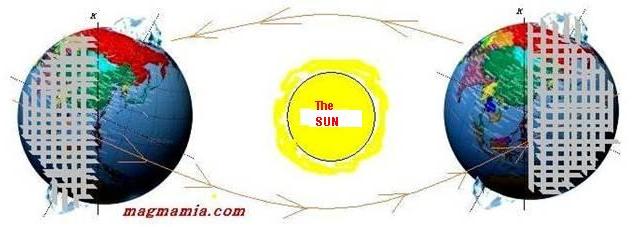
Figure 2 - (on the left)
The Northern Hemisphere experiences “summer” while the Earth in this position
because the Northern Polar glaciers are under pressure of the Sun during 6
months. Meanwhile the Southern Hemisphere experiences “winter” since the
southern hemisphere does not face sunlight for 6 months. (on the right) The
Southern Hemisphere experiences “summer”, while the Earth in this position,
because the Southern Polar glaciers are under pressure of the Sun for 6
months. Meanwhile the Northern Hemisphere experiences “winter” since the
northern hemisphere does not face sunlight for 6 months.
Each Pole is pressured by the Sun for 6-month
periods by turns and thus, it is assured that the Magma heat (summer season) dominates the hemisphere in
question.
Then, the Sun does not have any
direct function in the process of heating the Earth, but has an indirect
function.
The Hemisphere of the Pole under
pressure of the Sun has minimum
exposure to the Polar coldness and maximum exposure to the heat coming from
Magma.
In other words, the hemisphere
of the polar having 6-month daytime
experiences the summer and the
hemisphere of the polar having 6-month
nighttime experiences the winter.
As is known, the reason why each
Pole experienced by turn the daylight and the nighttime for periods of
6-month, is because of the axial tilt of 23.5 degrees. (Figure - 2) At the
moment, the Northern Pole at the end of axial facing the Sun is
experiencing 6-month daylight but the Southern Pole, which remains in shadow, is experiencing 6-month nighttime.
After 6 months, when the Earth reaches other side of the Sun without
changing its position -this time- the Southern Pole, which was previously
at distance, will experience 6-month daylight since it faces the
Sun but the Northern Pole will experience 6-month nighttime since remains in the shadow.
However, (moving from the Poles
towards the Equator) in the daylight
position of both the summer and
winter Hemispheres (more or less depending on location of the Hemisphere),
the Sunlight heats the cold coming down from the Poles.
In the summer Hemisphere, the
weather is warm also in the nighttime since the Pole is pressured by the
Sun directly for 6 months (for 24 hours). (Because the Pole is experiencing
uninterrupted the daylight and the coldness coming down from the Pole is
heated and carried downwards.)
As for the winter
Hemisphere, only the cold spread
(in the daylight side) is heated by the Sun since the Pole experiences
6-month long nighttime (although it is not under the impact of the Sun at
all). But this is only a “relative heating” because of the cold weather to be experienced
immediately after it; the cold would dominate the night.
It is clear that the Sun does not have any direct effect on heating
of the Earth but it has an indirect function which is “to suppress Polar
cold and thus to enable Magma heat to function”. Without a doubt, it does not
mean that the Sun has no heating function but its heating function works by
cooperating with the heat released from the Magma up in the air and almost
by restraining the cold.
Each cool air lot or piece of
land, exposed to the Magma’s heat on the bottom and to the Sun on above
should definitely get warmer.
However, if the Magma wasn’t the “original” source of heat, the
Earth would be warm in the “daylight” only on the surface (just like any
other planet) and would freeze at “nights” since the thermometers read (-)
a few hundred degrees.
Thus, the Magma heats the Earth but the Sun
(switches down to air conditioners) to
adjust the heat level of the Earth.
Accordingly the shifting of the
hot and cold, as explained above, is the source of all of the weather and
the climate conditions:
The heat coming from the Magma
moves towards the North Pole in the Northern Hemisphere and towards the
South Pole in the Southern Hemisphere. The coldness (the high pressure) coming down from the Pole in that
Hemisphere covers the low pressure
area caused by the heat rising upwards. During this process, which can be summarized as the Polar
glaciers cooling the Earth’s Crust heated by the Magma, certain weather
conditions are experienced on Earth such
as rain, wind, hot and cold weather, sea waves etc. (all for the purpose of
cooling the Earth).
If the axial tilt of 23.5
degrees had not existed, then the Earth would experience the winter in
every night and the summer in every daytime -since both Poles would have
daytime and nighttime on each day-.
2 – Contrary
to the popular belief, the SEA MOVEMENTS and WAVES do not occur as a result
of being pushed by the winds.
The exchange between the Magma’s heat and the Polar cold –primarily
and rapidly- takes effect on the “seas”.
The shortest route from Magma to
the seas, which protect the Earth from the high temperatures in the Magma
by circulating under the Earth’s Crust, is the high seas which have the thinnest layer of the Crust but plenty of the seawater.
Therefore, at first, the Magma
heat is absorbed by the high sea bottoms and then spread into the water in circles.
(This will cause small waves in the sea.) The cooling of the seawater,
which gradually gets warmer and warmer, is assured by the cold air exposed
to on sea surface. However, the vertical
rising of the heat on the sea surface towards the Atmosphere is prevented
by the clouds –in the day time- which absorbs the sun lights. (Because of
the clouds are warmer than the heat rising up.) Therefore, the heat unable
to rise any further changes its direction and heads up the mountains which are the coolest areas
available at that instant. (The sea breeze in daytime.) The heat heading
towards the mountains will first hit the summit and then into the cooler
direction (by tagging along the clouds). (The basic principle here is that heat constantly moves towards the cooler places.)
At night, (when the clouds above
the sea cool down –because they no longer face the Sun) the heat of sea
will begin to rise vertically from the sea surface and carry up all the
clouds covering its surface. (When the heat starts to rise up, “lower pressure areas” occurs on
the sea surface.) Meanwhile, the top of the mountains are covered with the cold air (which comes by
filling the lower pressure areas left by the clouds streaming from the
peaks during the day and following the same path). The lower pressure area
caused on the sea surface (void area) allows the cold (heavy) air which
cannot hold on to the peaks anymore because of the conical structure of the
mountains to fall down onto the slopes and then onto the lowlands, and at
last onto the sea surface. (The mountain breeze of night time.). Thus the
seas cool down and the pressure on seawater surface is balanced.
However, all of those pressure
transitions lead to the movement of the seawater (which might be very
powerful or barely noticeable depending on the seasonal conditions). The severity of the seawater movement
might be “low” or “high” depending on the difference between the hot air
and cold air replacing each other. In other words, the level of movement
(waves) depends on the level of difference between the heat pushing up the
sea from its bottom and cold pushing it down from up.
This difference is very low in
the summer. The air falling from
mountains and covering the sea surface (and replacing the heat rising from
the seas) is not cold (thanks to
the Sun) but relatively warmer.
In this case, the air covering on the sea surface cannot apply high
pressure and the heat rising from the sea will easily go to the surface and
move forward.
In the winter, the air mass
falling from mountains onto the sea surface is much cooler and heavier. (As
explained above, cold air spread by
the Polar glaciers on the winter hemisphere without seeing daylight for 6
months is the cause of this fact. The other reason is that majority of the mountains are covered with snow and each
one of them acts like a local pole and carries the cold the sea surface.)
The weight of the cold air
covering the sea surface increases the pressure on the sea
surface. Since the heat
rising from the sea bottom (the Magma) could not climbed over this weight
which covers it -like a lid on a pan-, the internal heat of the seawater
inevitably begins to increase. The increasing water temperature
initially leads to the movement –known
as ground swell- on the sea bottom.
Soon, the deepest places
rich in water (the high sea bottoms) will become to the places where heat accumulates the most. The “struggle” between the heat
accumulated at the bottom and the cold on the sea surface will almost
bubble up the water and increase the number of waves spreading from center
to the circle -from high seas to the coasts-. The increasing number of
waves is also a sign of the storm.
After a while, when the internal sea temperature rises even further, it
will burst suddenly, drill through the heavy air and upsets the pressure
more or less balanced on the land, just like a boiling pan rocketing its
lid.
This erupted heat will go up to mountains and then continue moving upwards by leaving behind low
pressure areas; meanwhile the cold
(and heavier) air balanced and waiting up there begins to fall down
onto the sea surface following the same path with great speed.
The waves are not merely the seawaters coming towards the coasts
because of the impact of this heat
explosion. The waves on moving
from center to the coasts also push the cold and heavy air above it from center to the coasts. Trying
to cool down the seawater, almost by functioning
as hand fan, the waves disturb the pressure areas over the lands and
cause winds.
As it is clearly understood,
although the cause of the winds is the high pressure moving towards
the low pressure area, the trigger of this process is not the lands, but the seas.
The seas are the first places absorbing the Magma heat
and pressured by the Polar cold at
the maximum level and hence the struggle starts just into the seas
ever.
Accordingly, the heat, which is
the trigger of even air conditions only experienced on land, is actually
the heat rising from the Magma through
the seas and heading towards the
lands.
3- Contrary to the popular belief, the WINDS are not events which start on the lands and
cause to the waves by having an impact on the seas.
On the contrary, the interaction
between the heat rising from the sea and the cold coming from the Pole
causes the WAVES, at first, and
then the WINDS.
If the trigger of sea waves was
the wind, it would drive all the seawater from coasts to the high seas
-just like rolling up a carpet- when it blows from coasts to the high seas;
we would gaze on dried-up sea bottom, just like looking at an empty pool,
and would wait for the sea to
return.
4- RAIN (which
is formed as explained above) comes with the clouds.
The clouds, rising from all over
the Earth in summer and winter, (and
so having nothing to do with evaporation of the surface water by the Sun)
smoke from the mountain peaks.
The clouds, rising from the
Northern Hemisphere, move towards the North Pole, and, ones rising from the
Southern Hemisphere move towards the South Pole.
But, this direction followed by
the clouds is not option but a necessity.
The power gathering and driving
of them is actually just the air which
is heated by the Magma and which rises as heated.
The clouds are much lighter
than hot air and hot air always
moves towards the cold around
the Earth (towards the Pole of its Hemisphere) as well as carrying away all the clouds along its path.
During this journey, the clouds
will condensate and begin to freeze because of the cold gradually
increasing along the way. Then, the weight of the clouds increases in
parallel to the freezing and soon they will reach up to a weight which
cannot be dragged by the air and they stop (because the temperature them
differences between cold in them and heat surrounding them increases) and
eventually they are decomposed
and fall down on Earth as rain.
The condensation of the clouds might take a long or short period of
time depending on the seasonal conditions of the hemisphere in question (in
other words depending on the Pole pressurized by the Sun).
The Polar cold dominates the
winter and thus the journey of the clouds takes a short while. Even sometimes, they might freeze and
fall down as snow when they are just smoking
on the mountains.
[The reason why wake up one
morning and see that the surrounding mountain tops are covered with snow is
not the fact that it snowed to all over the region but could only on the
summits without melting away; it is because of condensed and frozen clouds
smoking on the mountain tops before it could “rise any further”. If you
were on a mountain at that moment, you would be experiencing a “snow storm”. If you suddenly find
yourself surrounded by “fog”, it
doesn’t mean that you are surrounded by the “clouds falling down” but “by
the clouds smoking under your feet”. The fog surrounding airports could
not be prevented with “cooler
bombings” because nobody has realized that “the clouds do not fall down but the constantly form at ground level”.]
In the summer Hemisphere, the clouds are able to condensate and fall
down as rain at locations close to the Pole after a long journey -because the Pole stays under pressure of
the Sun 6 months and because of the absence of the sufficient coldness-.
Therefore, although it is not
summer in that hemisphere, regions close to the Pole constantly receive
rain and the lower regions (except of the Equator area), does not almost
receive any rain during the summertime.
But in the summer Hemisphere, the clouds cannot be condensate due to the heat and begin to build a gradually thickening layer in the
sky since new clouds coming from the mountains also start to accumulate.
(This layer is the reason why we cannot see any stars up in the sky at some
summer nights.) The clouds accumulated here cannot rise anymore because the
heat received by this cloud layer from the Sun is higher than the heat rising from below.
(This is the layer, as mentioned
on previous pages, which prevents the vertical rising of the sea
temperature during the daytime. The heat of sea, which cannot pushed
through this layer on top of it, heads towards the mountains during the
day. The mountains are always cooler than the seas because the Magma heat on the mountain bottoms
cannot reach up to the level sufficient for heating the summits. Thus,
summits of the mountains are always cooler. If the Earth was being heated
by the Sun, then the mountains would be the hottest places on Earth since
they are closer to the Sun.)
When cloud layer gradually becomes thicker (because of increased
exposure to sunlight), its heat also increased. The new clouds coming from
mountains will be pushed by the heat released from thick layer before they
can rise any further and they will move towards to colder places such as plains and the seas, then they will be decomposed, scattered like a “ball
of cloud”.
The source of the high-level humidity on the lands
and over the seas is actually those cloud fragments scattered into the air.
The reason why the high humidity
in the weather leads to very hot
weather in summertime might be explained with fact that seas try to cool
down by distributing the heat of Magma received onto the humidity in the air.
When the thick cloud layer in
the sky begins to cool down when the Sun goes down in the evening, the heat
rising from the seas will carry the
cloud fragments scattered into the air (humidity) and accumulate them.
[[People looking at the satellite photos taken at that moment might think
that vapors rising from the seas
form the clouds rising up from the seas and accumulating like a ball of
clouds.]]
Another function of this thick cloud layer in the sky is to
block and reflect the harmful solar rays back when they are way up and to ensure filtration of rays reaching down
on the Earth by using a very thick layer.
Then, the clouds actually minimize the effects of the Sun and prevent evaporation of the ground
waters rather than being formed of ground waters evaporated by the Sun.
Moreover, they protect the flora from the Magma’s heat by assuring that the
humidity spreads into the air. If it
was not for the humidity spread
into the air, the heat rising from
the Magma would destroy the
flora - in the summer months which receives almost no rainfall-
The clouds condensate and turn
into rainfall, and the leave several low pressure areas (replacing the
clouds). The high pressure fills those holes rapidly at higher regions and
the heat rising from the lands and the seas cooled by rainfall – which is actually the Earth’s overhead
sprinkler system- moves towards the higher points. Thus, the
increasing of the pressure transitions increase the rainfalls and the
increasing of the rainfalls increase the pressure transitions. This
continues until the balance established.
[The cloud works like a
steam-operated machine producing
steam when cooling down and heating up thanks to its SALT VAPOR content and
being operating with the self-generated steam. Since the cloud is
transported by the hot air and the hot air always travels towards the colder areas, the heating and steaming mechanism of
the cloud starts to malfunction when the surrounding air gets colder and
the number of frozen particles will begin to increase. Even if the salt
content melts the frozen particles into the water, those water drops will
begin to turn into frozen particles again and the cloud will gradually
begin to freeze and become heavier since the environment is no longer warm
enough to evaporate the water. Just a little bit later, the cloud will
begin to decompose by absorbing
the surrounding heat -which is
hotter than the cloud- and to fall as rain since it is much colder and heavier than the air
surrounding it.]
The clouds, turning into the
rainfall don not only change the pressure balances in the air but also release
some gases such as ozone and nitrogen etc. when the clouds (containing a range of smokes)
decompose and the rain begins to fall and then these gases head towards the
Atmosphere. (Probably, this is how the Atmosphere was formed).
The Ecuador
area receives
rainfall throughout the year although it is far away from both Poles is
another matter to be clarified since we are already discussing the issue.
The destination of “heat” rising from both Hemispheres
is the Polar region where it is
released. The destination of the “cold”
coming down from both Poles is the Ecuador
area where it is released. In other words, the last destination point (final point) of cold released from both
Poles is the Ecuador zone of each Hemisphere’s. Thus,
it is inevitable for Ecuador area to be the ultimate place of cold accumulation.
As the widest latitude on Earth, the Ecuador is not only a place
where cold accumulates the most but also a place that the heat (up from
Magma) rises the most.
Due
to the fact that the north of the Equator will be the coldest while it is
winter in the Northern Hemisphere, and the south of Equator will be the
coldest while it is winter in the Southern Hemisphere, there is constant
cold in the Equator throughout 12 months (6 months in the north, 6 months
in the south), which will condense the clouds and transform them into
precipitation. Therefore, the clouds
arising from the high mountains in the Equator Zone freeze before rising
too much and precipitate as “snow” at peaks.
In
that case, the mountains in the Equator Zone covered with snow 365 days
will act as a local pole; the hot air rising 365 days towards the
atmosphere from the Equator Zone will scatter the clouds to the snow
covered mountains; and the cold air coming down from the snow covered
mountains will constantly condense the clouds and cause constant
precipitation.
The
reason why the place where the air is the hottest is again the Equator
although Equator Zone receives the most cold is due to the place where the
heat of Magma rises the most is again the -widest latitude- Equator. While
high heat of Magma makes the cold air remain at a certain altitude by
constantly pushing it upwards, it also ensures that the cold air dropping
below this “line” that is at an extremely altitude from the ground level is
rapidly heated. Therefore, the region is constantly hot; and constantly
receives precipitation to the rising clouds are rapidly condensed.
The
low and high pressure balance is almost based on intension on the Ecuador zones and this is the
cause of hurricanes, tsunamis and major earthquakes experienced in regions
close to this area.
When
the temperature rises in other regions of the Earth, the cold air comes
down but here –on the contrary- cold air at its limit reaching to the (Ecuador)
pressures and compresses the Magma heat and prevents it from rising any
further. In other words, the cold air coming down to the Ecuador from the
Poles does not allow the Magma’s heat rising on the Ecuador zone any
further after a certain height and the Magma’s heat does not allow the cold
air applying pressure from above to come down any further than a certain
level.
This
causes hot-cold pressure balance to be on the altitudes of clouds in the Ecuador
region (much higher than the seas) (although this occurs on the seawater on other regions of
the Earth). The Ecuador
is constantly under the low pressure
zone because its pressure balance is not at the “sea level” but as the heights “where the clouds travel”.
The
heat constantly rising from the magma and cold air constantly coming down
from the Poles start to push each other on this intersection line located away from the ground level and the
clouds rising from the mountains start to cumulate under this line –because it is the coldest point- (as if
cumulating under a dome). At this point, the circular movements of the clouds, just like wings of a
ventilator, suggest that the hot and cold air push each other upwards and
downwards. The Magma’s heat and
Polar cold function as two separate drillers trying to drill the same point
on a wall from two opposite directions. Eventually, the heat coming from
the Magma will win because it gradually increases. The waves in the sea will become stronger when the heat coming from
the Magma increases; when the “heat” succeeds to drill the cold air layer,
it will rise –as if exploding- with a “drilling” movement and allow the
pressure to fall through the “drilled path” opened by the heat. This is a
hurricane… [Probably, the way of preventing the hurricane will be “drilling the point of impact” (“the
eye of hurricane”) where the hot and cold weather intersects “by using rockets spreading high
temperatures” without it has a chance of going into cyclic movement.]
Since the Magma is forced to
generate a large amount of heat in order to “drill through” the cold air
pressure above it, plates on sea bottom might be broken and this might
cause earthquakes and tsunami.
5- ROUTE OF HOT AIR
AND CLOUDS
What
determines how high the hot air (and the clouds) will rise vertically from ground and at what
altitude they will advance horizontally
and lead to the Poles are; the Sun, the Moon and the Stars.
Clouds rise towards the
Atmosphere to “an extent permitted” by the rays (and heat) of Sun in the daytime
and in the nighttime by the lights (and heat) received from the Moon and
the Stars. (The
hot air avoids environments “warmer
than it” and always travels to “colder”
environments). The hot air
(and the cloud), the vertical rise of which decelerates as the
heat received from the Sun or the Moon and the Stars increase, will
continue its journey horizontally
this time. However, what determine the route of such horizontal journey are also the Sun or the Moon and
the Stars.
While the clouds
cannot rise too much due to the heat of the Sun in the daylight, they also
move in the opposite direction of
the Sun. However, due to the fact that the direction of such traveling
is affected by the location of the Sun changing every second throughout the
day and constantly deviates -due to 23,5 degree
axial tilt of the Earth and the fact that it rotates counterclockwise
around its own axis-, eventually North Pole will exist in the North and the
South Pole will exist in the South.
For instance, (in the Northern
Hemisphere) while the clouds will look like as they are pushed to the west with the first lights of the
Sun, they will deviate to east
-due to Earth’s rotation-, but to northeast
-due to its axial tilt-; at noon, rays of the Sun will come from overhead
and will immobilize the clouds and cause them to form thick layers; towards
evening, although the clouds will be pushed to east, this time they will be pushed to west once again with the
first lights of the Moon (just rising), however, they will be deviated to
northeast once again -due to the tilt at equator and the rotation direction
of the Earth-. In fact, the path the clouds, which are constantly deviated
as such, follow is linear and
the direction is the North Pole (The path the clouds follow in the Southern
hemisphere is the South Pole, again due to the same factors).
Furthermore,
the effect of the Moon on the
clouds (just like the Sun) will change at each hour of the night depending on its location. However, an
interesting characteristic of the Moon different from the Sun is the various shapes that it takes throughout
30 days. Occasionally taking the shape of a full moon or crescent,
etc. and sometimes reflecting the rays received from the Sun virtually like
a concave or convex mirror, the Moon determines the
way the clouds gather and orientate
not just by constantly changing its location, but also with various
luminous effects as well.
One
may think that due to stars looks extremely small to us, they cannot have
much heat impact on the clouds. However, the number of star images falling on each “air particle” is equal
to the number of stars we see with our own eyes. In other words, each side
of each air particle has an (proportionally scaled-down) entire sky.
This also means that one of the surfaces of each particle completely
receives the light and converts into heat.
Another important factor causing
both hot-cold air and winds to deviate is the “Optical
Axis”, the line
that distinguishes the day and the night. The cold air descending from the
Poles hits the Optical Axis at an angle of 23,5
degrees, and deviates to Equator with the same angle, however, this time,
scattered back to the Pole (due to the rotating direction of the Earth and
tilt at the Equator), however, once again descends due to its “heavy weight”
and hits the Optical Axis once more. Thus, the descending cold air drops
down by hitting the Optical Axis as if going down the stairs so to speak.
The reason the cold air hits the Optical Axis is due to the fact that the
air in the “other side” of the “line” (distinguishing the day and the night
from one another), i.e. the “night” is -always- colder and heavier.
The fact that cold air hits the
Optical Axis in all locations from the Pole to the Equator and returns
causes it to drop down by gaining acceleration with a circular motion and
causes all the pressure areas to be affected.
(Another extremely important
effect of the Optical Axis is that; the Pole-bound hot air rises up to the
“dome” above the Pole -i.e. the gap between the Pole and the atmosphere,
and then pushed back downwards. This causes the air to be blown to the Pole
at first and then down sides as if there is a ventilator at the top of both
Poles).
Then, the “Coriolis Force” is not the cause of deviation of the air currents.
(According to this view based on
the Coriolis Theory; the force is created by
immobile air at back of a rotating sphere causes to the air moving in front
of sphere to hit the sphere and to deviate.) However, if the Earth was
under such an impact, then the air would blow with the “same strength” both
in the summer and the winter Hemispheres, and both hemispheres would
experience extreme weather conditions. This view ignores the reality that
the Earth rotates with the Atmosphere. (This is like assuming that when a woman
in a moving bus –all Windows closed- blow dries her hair and her hair
moves, this is caused by movements of the bus.)
Since the “air weight difference” between the nighttime and the daytime
in the summer Hemisphere is low, this deviation is experienced only in the
winter Hemisphere (and in some places of the summer Hemisphere which have
quite high temperature differences between the daytime and the nighttime).
If the Coriolis Effect could divert the air, instead of the weight differences of the air masses colliding in the Optical
Axial, the air masses would be scattered in the summer Hemisphere and
the winds would never stop blowing in the summer.
*/*
SECTION IV- POWERS “HOLDING THE EARTH
TOGETHER” (Home)
If the Magma’s heat is pushing out the Earth’s Crust live
on (just like a boiling pressure cooker putting pressure on its lid), what
is the power holding the parts
in balance (preventing the pan from ejecting its lid or cracking
entirely)?
Without a doubt, this depends on
the thickness and shape of the pot (the mountains and the lands), and its
relief valve on the lid (the volcanoes) used to reduce the internal
pressure; the ventilator, the air conditioner and the cold water (the
winds, the glaciers and the seas) used for cooling down the pan
continuously and also the automatic
mechanism for activating these cooling
systems.
This is how the Earth works..
We, (the living creatures who
are the source of petroleum for the Magma and the natural gas for the
Glaciers) are exposed to several weather and climate conditions while
acting out “our role” on the
Magma’s cooled down layer,
All of the weather and the climate
conditions, which assure survival, are just the struggle between the Magma and the Poles.
The Magma’s heat pushes the Earth’s Crust with great pressure as if
to explode it; but the Earth’s Crust is neither destroyed or decomposed
because the “air” retained in the Earth by the Atmosphere and cooled down,
made heavier by the Poles push the seas and the seas push the lands towards
the center.
The mountain tops shaped like an
“upside down V” enables cold air
oncoming from the Poles fall down on sea surface without holding on the
mountains; this pressure received from open end of “V” on the seawater seeming to be filled in a giant letter V in the high seas
is transferred to the horizontal
edges of V and thus the lands are pushed and compressed.
Water
and air prevent disintegrating
and shattering of the Earth and they owe their weight solely and truly to
the cold air. If it
was not for the cold air, the
water would turn into the vapor,
and the air would rise as it gets warmer and lose its weight as it rises. Thus, a place called the Earth would
not even exist.
The seas reduce the Magma
pressure by rapidly conveying the heat received from the Magma to the
surface (without losing any water as
a result of their SALT content). The heat conveyed to the air is cooled
by the air coming down from the Poles. The seawater, which evaporates and
rises from the mountains in the form “clouds”
while constantly circulating under the Earth’s Crust to reduce the heat
(pressure) of the Magma, is turned into the water after condensing with the
“cold” coming down from the Pole
and being decomposed. The water
falling down as rain cools down the lands and prevents sea-level drop by flowing back into the sea.
In this case, if the land under
our feet cannot be ejected by the
Magma’s pressure, we primarily owe this to the weigh of the cold air, in other words the Polar Glaciers. (If so…) This is just
an alarming fact.
The other substance accountable
for all these (as mentioned in Section
II/1 “water”) is the SALT. (If the seas did not have SALT, the
Magma heat would destroy the seas by evaporating them.) (Only the
seawaters, which circulate under the Earth’s Crust and directly contacts
with the Magma, are evaporated -actually with salt-.). The seas can quickly speedily expand and shrivel because they are
able to cool down or heat up quickly thanks to their salt content and thus
they stabilize the pressure balance on it and its pressure applied on the
lands. Another important function of the salt, as mentioned previously,
is to prevent clouds from freezing in mass from and falling down from the
sky as icebergs.
In short, the Earth mainly owes its existence to SALT and ICE.
The source of the water is ICE but SALT preserves it.
If SALT and ICE had not existed, the Earth would explode and would
be smashed to smithereens, just like tiny pieces of salt and ice.
*/*
SECTION V- CONCLUSION
(Home)
The Earth is not just an
ordinary planet formed as a mass of lava exploded from the Sun once upon a
time and then cooled down; it is unique
system.
Our ancestors, who
have never survived through an age when they swam in lava, did not live on
the so-called Ice Age.
The Earth is not a
gradually aging piece of rock but a closed circuit system which
repairs and renews everything.
The Earth is a
place where time does not exist…
***
|